



20260123_1 The2610 #ThalesCentury #ศักราชธาเลส ๒๖๑๐
The2610 #ThalesCentury
#ศักราชธาเลส ๒๖๑๐
(20260123_1 เพื่อแผ่นดืนเกิด)
แขกชาวฮังการีเมื่อวานนี้ที่คุณนุช Jirayunat Ajariyakajorn แนะนำ
และตามไปพบผมว่าไม่ธรรมดา
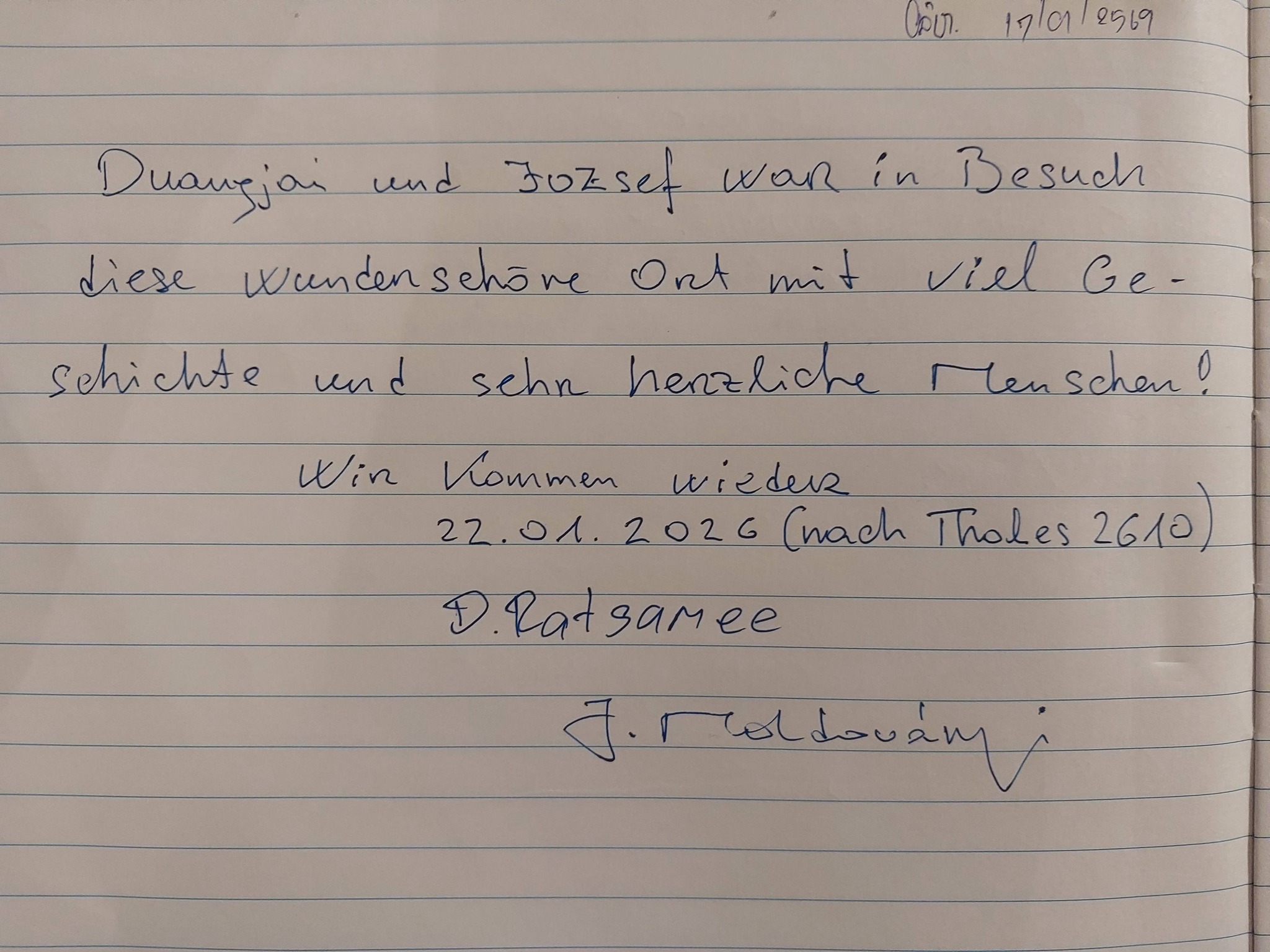
ตอนจะจากลาผมขอเขาเขียนสมุดเยี่ยม
เห็นเป็นภาษาน่าจะสวิสหรือแมกย่าที่อ่านไม่ออก
แต่ลงศักราชแปลกว่า ๒๖๑๐
นึกถึงที่พวกเราก็เพิ่งทำงานพุทธชยันตี ๒๖๐๐ ปีตรัสรู้กันเมื่อ ๑๐ กว่าปีก่อน
จึงสนทนาได้ความว่าเขานีบถือ #Thales เป็นต้นศักราชของเขาคนเดียว
เพราะคือจอมปราชญ์ของโลกและมนุษยชาติ
เกิดก่อนสิทธัตถะ ตายก็ก่อนพุทธปรินิพพาน ๒ ปี
เขาถือว่า Thales เป็นผู้รู้สารพัดจึงนับถือและตั้งศักราชนี้ขึ้นคนเดียวใช้คนเดียว
คุยกันไปคุยกันมา ดูท่าว่าเขาน่าจะไม่ธรรมดา
แถมบอกว่าตอนนี้มาอยู่กระบี่แต่เริ่มติดใจนคร
นอนคีรีวงมา ๓ คืน ชอบมาก ๆ
ก่อนจากกันก็เลยแนะนำหนังสือ #รอยลูกปัด
เพราะมีเกี่ยวกับกระบี่และโรมันด้วย
เขารีบซื้อทันที มีอังกฤษด้วย
แล้วแถม #สุวรรณภูมิ เล่มน้อย
ตอนเขาขอให้ลงนามก็เลยลงศักราช ๒๖๑๐ ด้วย
" ... you the 2nd ... " เขาอุทานด้วยดีใจว่าเรานี้ทันกัน
ใครอยากทันด้วย อ่านครับ ...
Posthumous portrait of Thales by Wilhelm Meyer, based on a bust from the 4th century
Born c. 626/623 BC
Miletus, Ionian League
Died c. 548/545 BC (aged c. 78)
Philosophical work
Era Pre-Socratic philosophy
Region Western philosophy
School Ionian / Milesian
Main interests
Metaphysicsmathematicsastronomy
Notable ideas
Philosophical inquiry
Water is the arche
Eclipse of Thales
Thales's theorem
Intercept theorem
Know thyself
Static electricity
วิกิพีเดีย เกริ่นนำไว้อย่างนี้ครับ ...
Thales of Miletus (/ˈθeɪliːz/ THAY-leez; Ancient Greek: Θαλῆς; c. 626/623 – c. 548/545 BC) was an Ancient Greek pre-Socratic philosopher from Miletus in Ionia, Asia Minor. Thales was one of the Seven Sages, founding figures of Ancient Greece.
Beginning in eighteenth-century historiography,[1] many came to regard him as the first philosopher in the Greek tradition, breaking from the prior use of mythology to explain the world and instead using natural philosophy. He is thus otherwise referred to as the first to have engaged in mathematics, science, and deductive reasoning.[2]
Thales's view that all of nature is based on the existence of a single ultimate substance, which he theorized to be water, was widely influential among the philosophers of his time. Thales thought the Earth floated on water.
In mathematics, Thales is the namesake of Thales's theorem, and the intercept theorem can also be referred to as Thales's theorem. Thales was said to have calculated the heights of the pyramids and the distance of ships from the shore. In science, Thales was an astronomer who reportedly predicted the weather and a solar eclipse. The discovery of the position of the constellation Ursa Major is also attributed to Thales, as well as the timings of the solstices and equinoxes. He was also an engineer, known for having allowed the Lydian army to cross the Halys River. Plutarch wrote that "at that time, Thales alone had raised philosophy from mere speculation to practice."[3]
๒๓ มกรา ๖๙ ๐๙๐๐ น
บ้านบวรรัตน์ ท่าวัง เมืองนคร
https://www.facebook.com/photo?fbid=2008978836663895&set=pcb.2008979106663868



บทความล่าสุด




Related Articles
